
Gavin Williams · Published 6 December 2018 · Updated 17 July 2026 · 6 min read
Car modifications: Will they affect your Car Insurance?
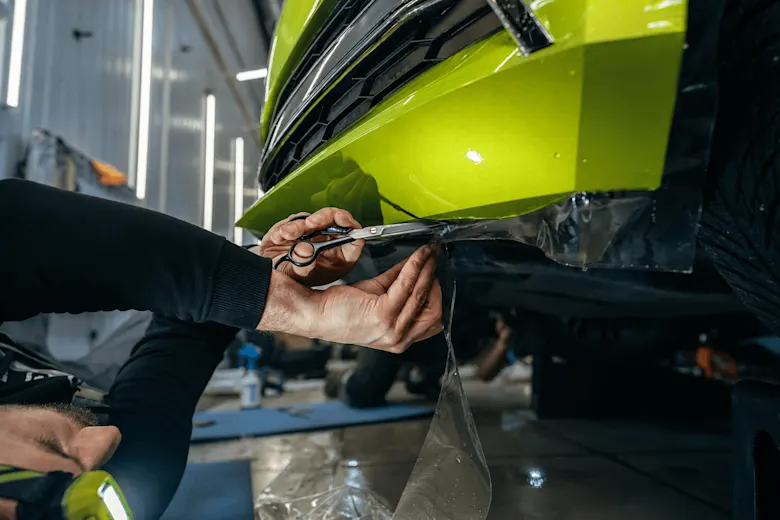
If you're a fan of the franchise, the quickest way to get Furious, Fast is to modify your car and not tell your insurer. A voided policy, a rejected claim, and a repair bill that's entirely yours to cover: that's a bind even Vin Diesel couldn't drive out of.
A wise person once said “the only thing you must do to a car is buy it”. There are engineers and designers in Japan, Italy, Germany, Korea, France and China who know what they're doing. Yet, South Africa has a thriving car modification culture. From lowered Golfs in Jozi, mobile boom boxes and kitted out and lifted bakkies in the Karoo, South Africans love standing out by “uniqueifying” their rides. Most of those modifications are perfectly legal. Some are not. And almost all of them have implications for your Car Insurance that your insurer expects you to know about.
Here is what you need to understand before you visit the fitment centre.
What counts as a modification?
For insurance purposes, a modification is any change to your vehicle that departs from the manufacturer's original factory specification. That covers everything from a new sound system and custom paint to a turbo upgrade or a suspension lift.
From a legal standpoint, vehicle modifications in South Africa are governed by the National Road Traffic Act (NRTA) 93 of 1996. The Act sets out what is permissible in terms of roadworthiness and safety. Modifications that compromise either of those can render your vehicle unroadworthy, expose you to fines or impoundment, and, critically, make your Car Insurance claim invalid.
The Automobile Association (AA) is clear on this: before modifying your vehicle, check that the changes are legal, safe, and compliant with the NRTA. Many insurers will not cover vehicles with unauthorised modifications.
The golden rule, just disclose everything
When you take out Car Insurance, your insurer prices your policy based on the vehicle's risk profile as it left the factory. Change the vehicle, and you change the risk. It is your legal and contractual obligation to tell your insurer.
This obligation cuts both ways. If you modify your car before taking out a policy, declare it upfront. If you modify it after your policy is in place, notify your insurer as soon as the work is done.
If you buy a used car that has already been modified, the same rule applies. Declare every modification the previous owner made, whether or not you plan on keeping them.
How common modifications affect your Car Insurance
The table below gives an overview of how common modifications may be viewed by insurers. NB: Individual policies vary, so always confirm with your specific insurer.
Modification type | Typical insurance impact |
|---|---|
Engine upgrades and performance tuning | Higher premium. Increased power = higher accident risk in the eyes of your insurer. |
Suspension changes (lowering or lifting) | Higher premium. Affects handling and stability. Lifts over 50mm require NRCS approval. |
Custom paint and vinyl wraps | Possible increase. Specialist finishes cost more to repair or match. |
Aftermarket audio and in-car tech | Higher premium. Upgraded sound systems and devices raise the vehicle's theft appeal. |
Tinted windows | Neutral to higher. Legal tint is fine. Limo tint (below 35% VLT) is illegal and will affect your cover. |
Spoilers and body kits | Higher premium. Signals a performance-oriented driver to most insurers. |
Aftermarket wheels and tyres | Varies. Larger rims increase vehicle value. Incorrectly fitted tyres affect handling and cover. |
Anti-theft devices (trackers, immobilisers, gear locks) | Lower premium. Reduces theft risk. Trackers from approved providers may earn a direct discount. |
Parking sensors and cameras | Neutral to lower. Reduces accident risk in parking situations. |
A closer look at high-impact modifications
Engine and performance upgrades
Turbochargers, engine swaps, nitrous oxide kits, and exhaust modifications all signal one thing to an insurer: more power. More power means a higher assumed accident risk, which typically means a higher premium. TopAuto reported in November 2024 that significant engine changes may require re-certification to confirm roadworthiness and emissions compliance under the NRTA.
Suspension changes
Lowering or lifting your suspension is popular, but both carry risk if done incorrectly. Under South African law, the maximum allowable suspension lift is 50mm from the manufacturer's original specification without requiring a Letter of Authority (LoA) from the National Regulator for Compulsory Specifications (NRCS). Exceed that, and you need NRCS approval before the vehicle can legally be used on a public road. Without it, your insurer is under no obligation to pay a claim.
Tinted windows
Window tinting is legal in South Africa, but within strict limits. The NRTA requires a minimum of 35% visible light transmission (VLT) on side and rear windows, and 70% VLT on windscreens. Limo tint, which falls well below the legal threshold, is illegal. Insurers regard below-legal tint as both a safety hazard and a policy breach. If your windows do not comply, expect your claim to be complicated.
Anti-theft devices: the modification that works in your favour
Not every modification pushes your premium up. Vehicle Tracking systems, electronic immobilisers, gear locks, and hood locks all reduce your theft risk, which is something insurers reward. If you compare Car Insurance quotes through Hippo, you will find that some providers offer specific discounts for approved Vehicle Tracking devices -which can also be found on hippo.co.za. It is the one modification worth talking to your insurer about before you buy.
Bigger wheels
Fitting larger diameter wheels and wider tyres changes the effective rolling circumference of the wheel. That matters because your car's gear ratios are calibrated to the factory tyre size. Go bigger, and the ratios shift: the engine effectively has to work differently through each gear, your speedometer can under-read your actual speed, and braking distances may increase. Insurers view incorrectly fitted or oversized tyres as a handling and safety risk, and if a claim arises where tyre specification is a contributing factor, an undeclared change in wheel size gives them grounds to dispute the payout.
What happens if you don't disclose?
Non-disclosure of material information is one of the most common grounds for claim rejection in South Africa. If your insurer discovers an undeclared modification during a claim assessment, they have grounds to:
Reject your claim outright
Declare your policy void
Refund your premiums and leave you uninsured
If your insurer discovers an undeclared modification during a claim assessment, they have grounds to reject your claim, declare your policy void, and refund your premiums — leaving you fully exposed. The Ombudsman for Short-Term Insurance (OSTI) confirms that non-disclosure of material information is one of the most consistently upheld grounds for claim rejection in South Africa. A claims assessor will inspect your vehicle after any incident. They know what factory specification looks like. If something has changed and was not declared, they will find it.
Compare Car Insurance quotes on Hippo
Whether your car is completely standard or thoughtfully modified, the most important step is making sure your cover reflects reality. Hippo lets you compare Car Insurance quotes from a range of FSP-registered insurers side by side, so you can find a policy that works for your vehicle and your budget.
Enter your details once. Compare in minutes. Your better starts here.
This article is for informational purposes only and does not constitute financial, legal, medical or insurance advice. Hippo is a comparison site helping you evaluate quotes from trusted South African insurers. Always review policy details before making changes. Quotes are risk profile dependent and subject to annual review. No fees are charged for using Hippo’s comparison service. HAS (Pty) Ltd and HCS (Pty) Ltd are authorised FSPs. Terms and conditions apply.
Related Articles
2026-08-25
6 reasons to consider Scratch and Dent Cover in South Africa
A runaway shopping trolley in a parking lot. A gate that's slightly narrower and swifter than it looks. Someone else's bumper nudging yours at 5km/h while you’re in a parking lot. None of it is dramatic enough for a full insurance claim, but it still costs money to fix, and it still makes your car look a little less like the one you take pride in showing up in. That's the what Scratch and Dent Cover is built for.
Read More
2026-08-24
5 reasons to consider Tyre and Rim Cover in South Africa
Tyre and Rim Cover (also called rim insurance) is an add-on motor product that pays for the repair or replacement of tyres and rims damaged by road hazards such as potholes, debris and uneven surfaces. It's typically bought alongside your main Car Insurance policy, either as a standalone product or bundled in as an extra, rather than replacing your comprehensive cover.
Read More
2026-08-21
4 reasons to consider a Vehicle Tracker in South Africa
Somewhere in South Africa, a driver is handing over their car to someone who did not ask nicely. It happens roughly every 36 minutes, according to the latest SAPS figures, and knowing your number plate off by heart does very little to help once your car has vanished into traffic. However, knowing exactly where it is does.That is the basic logic behind Vehicle Tracking, and it is why so many South African drivers treat it as a given rather than an extra.
Read More
2026-08-20
5 reasons to consider Motor Warranty for your vehicle
Once your factory cover ends, and it always does, mechanical and electrical failures become your bill to pay. Extended car warranty cover is designed to bridge that gap by helping with mechanical and electrical breakdowns during the cover period.
Read More

Hippo Comparative Services (Pty) Ltd is an authorised financial service provider.
FSP number: 16357. Block A, Steyn City Capital Park, Erling Road, Riverglen, Dainfern, 2191
*Based on independent research by Kaufman Levin & Associates 2025.


© Copyright 2026 Hippo Comparative Services (Pty) Ltd. All Rights Reserved.