
Hippo Staff Writer · Published 23 October 2018 · 3 min read
Car Insurance write-offs explained
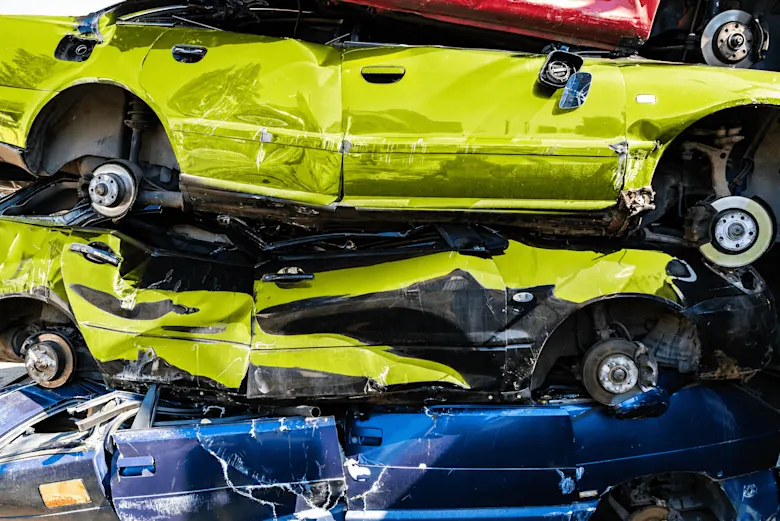
When thinking about car write-offs, an image that often comes to mind is a mangled wreck destined for a scrap yard. While extensive damages are often enough to warrant the car being written off as ‘beyond repair,’ in many instances the car is just not worth repairing even though it still looks to be in decent condition.
Defining Car Insurance write-offs
Insurance companies work along very strict policies and procedures when covering your vehicle. In exchange for monthly payments, the insurance company agrees to pay your losses to restore the car in the roadworthy condition it was before the accident. However, if the damaged car cannot be safely repaired or if it would be uneconomical to perform work thereupon, the case could constitute a write-off and the policyholder could either receive a replacement of the same or similar make and model, or a cash payout (minus the excess, dual insurance, betterment, and depreciation) in the retail, market or trade value of the car dependent on the agreement between the Insurer and the policyholder.
For example, your car may emerge from an accident with minor damages that look like they can be fixed at the local repair shop. However, if the repair costs are more than say, 70%, of the car’s current value of R100 000 (in this example R70 000), your insurer could declare it as a total loss. Car Insurance companies in South Africa will each use their own formula to determine when a vehicle is a total loss and must disclose it to you when you sign the insurance agreement with them.
The write-off process
After you’ve notified your insurer of an accident and your intention to claim from your Comprehensive Car Insurance policy, they will send an assessor to inspect the damages. The assessor will calculate the cost of repairs and compare them with the cash value of the vehicle. The assessor will also take into consideration availability of parts and the age and condition of your vehicle. They will then decide whether it can be repaired and legally be put back on the road, or if it will be more economical or safer to write it off.
What happens afterward?
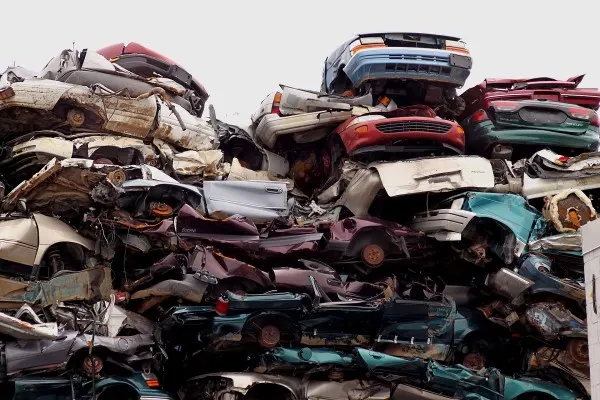
When compensating you for the write-off, the insurance company essentially buys the damaged vehicle from you and becomes its new owner. Once in their possession they will most likely sell it to a salvage company to recover some of the costs of the payout.
One important thing to remember is that, if your car is still under financing at the time it is written off, you must immediately notify the financing company. The vehicle is still the property of the financier until the insurance company settles the claim and pays the outstanding finance amounts to the bank or financing house. When offering you a car loan, the bank (and some insurers) may offer you top-up cover or credit shortfall insurance to pay the outstanding balance on your loan if your car is written off, so it would be to your advantage to look into these.
Can you disagree with a write-off?
If you disagree with the insurer’s decision to write off your car, and believe it can be repaired cost effectively, you have the option of appealing to the Ombudsman. It would however be wise to first attempt to escalate the matter within the Insurer in order to find a resolution prior to escalating same to the Ombudsman.
This article is for informational purposes only and does not constitute financial, legal, medical or insurance advice. Hippo is a comparison site helping you evaluate quotes from trusted South African insurers. Always review policy details before making changes. Quotes are risk profile dependent and subject to annual review. No fees are charged for using Hippo’s comparison service. HAS (Pty) Ltd and HCS (Pty) Ltd are authorised FSPs. Terms and conditions apply.
Related Articles
2026-08-25
6 reasons to consider Scratch and Dent Cover in South Africa
A runaway shopping trolley in a parking lot. A gate that's slightly narrower and swifter than it looks. Someone else's bumper nudging yours at 5km/h while you’re in a parking lot. None of it is dramatic enough for a full insurance claim, but it still costs money to fix, and it still makes your car look a little less like the one you take pride in showing up in. That's the what Scratch and Dent Cover is built for.
Read More
2026-08-24
5 reasons to consider Tyre and Rim Cover in South Africa
Tyre and Rim Cover (also called rim insurance) is an add-on motor product that pays for the repair or replacement of tyres and rims damaged by road hazards such as potholes, debris and uneven surfaces. It's typically bought alongside your main Car Insurance policy, either as a standalone product or bundled in as an extra, rather than replacing your comprehensive cover.
Read More
2026-08-21
4 reasons to consider a Vehicle Tracker in South Africa
Somewhere in South Africa, a driver is handing over their car to someone who did not ask nicely. It happens roughly every 36 minutes, according to the latest SAPS figures, and knowing your number plate off by heart does very little to help once your car has vanished into traffic. However, knowing exactly where it is does.That is the basic logic behind Vehicle Tracking, and it is why so many South African drivers treat it as a given rather than an extra.
Read More
2026-08-20
5 reasons to consider Motor Warranty for your vehicle
Once your factory cover ends, and it always does, mechanical and electrical failures become your bill to pay. Extended car warranty cover is designed to bridge that gap by helping with mechanical and electrical breakdowns during the cover period.
Read More

Hippo Comparative Services (Pty) Ltd is an authorised financial service provider.
FSP number: 16357. Block A, Steyn City Capital Park, Erling Road, Riverglen, Dainfern, 2191
*Based on independent research by Kaufman Levin & Associates 2025.


© Copyright 2026 Hippo Comparative Services (Pty) Ltd. All Rights Reserved.