
Hippo Staff Writer · Published 31 March 2026 · 5 min read
South Africa’s biggest petrol price shock yet - what to expect in the coming weeks
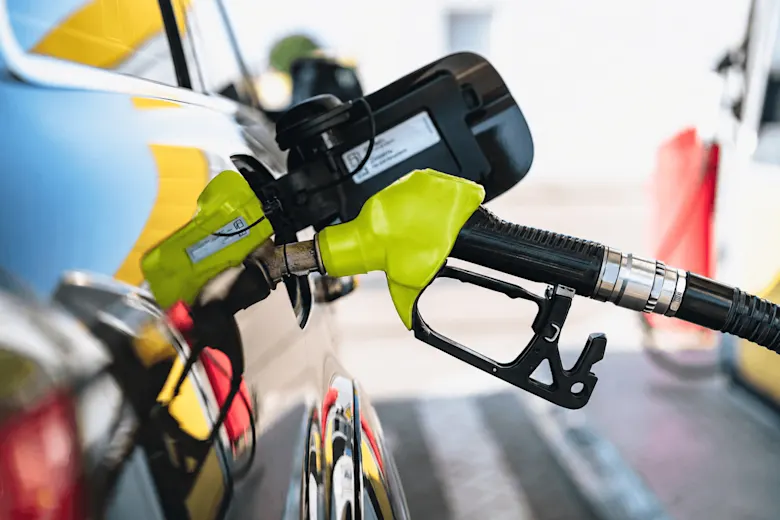
South African government temporarily reduces fuel levy by R3 which means the fuel price increases are as follows:
Retail Petrol 93 and 95 increases by R3.06 per litre in Gauteng (including levies)
Wholesale Diesel 50ppm increases by R7.37 per litre in Gauteng (including levies)
Further impact we can expect:
Rising fuel costs feed into food, transport and everyday expenses, squeezing household budgets over time.
The Reserve Bank has held interest rates steady, and the fuel outlook makes rate cuts less likely in the short term.
What can you do?
The best thing to do right now is to cut down on payments where you can. Review your bigger recurring expenses and compare quotes on platforms like Hippo to make sure you're not overpaying where it counts.
It seems that the Easter Bunny has brought us all a surprise this April, and sadly it isn’t a chocolate egg or a foil-wrapped bunny. There are petrol hikes… and then there’s this.
The latest data from the Central Energy Fund points to what could be the largest monthly fuel price increase on record. The previous peak, back in July 2022, saw prices climb by R2.57 per litre. Current projections are almost double that for petrol, with diesel rising even more sharply. However, with recent comment from Finance Minister Enoch Godongwana (31/03/2026), the government has reduced the general fuel levy by R3, easing strain on South African motorists.
Regardless, this is still a sudden change, and it lands at a time when many households were only just starting to feel a bit of relief from inflation. Here’s what’s driving the spike, and what to expect in the coming weeks.
What’s behind the increase?
The story starts with oil, and the global events that dictate how and when it moves.
Prices have climbed from below $60 a barrel earlier this year to above $100 (it is now sitting around $93.67 per barrel), following escalating tensions in the Middle East. Supply routes have come under pressure, especially around the Strait of Hormuz, a key passage for global energy flows. When that route is disrupted, prices tend to respond almost immediately.
For South Africa, the effect is direct. Our country imports most of its fuel, so higher global prices filter through without much delay. The rand adds another layer: it has weakened from below R16 to the dollar earlier this year to around R16.80–R17. That shift increases the cost of bringing fuel into the country, which in turn feeds into local prices.
What current projections suggest
Current increases of are R3.06 per litre for Petrol 93 and R7.51 for Diesel. Whereas, without the fuel levy cut, they would have been R3 higher. (Bakkie drivers, our thoughts are with you.) The Government will reduce the price structures of petrol and diesel over the next month, seeing fuel levies drop to R1.29 for petrol and R1.16 for diesel.
Fuel costs for South Africans in April 2026 are as follows:
Why it matters beyond fuel
Fuel cost spikes inevitably move through the economy. Think about it: when transport becomes more expensive, the cost of moving goods rises. That feeds into the price of food, retail products, and services. Farmers face higher input costs, businesses adjust their pricing, and over time, the overall cost of living starts to edge higher.
Where interest rates come into play
The South African Reserve Bank’s decision this week has been to keep rates unchanged.
Inflation had been easing, with recent data showing it around the 3% mark. That created some space to consider lowering interest rates. The thinking was that borrowing costs might start to come down, offering households a bit of breathing room. However, it appears that the fuel outlook has changed that picture.
Higher fuel prices tend to push inflation upward, both directly and through the broader economy. That in turn makes policymakers more cautious. Cutting rates in this environment becomes harder to justify, particularly with the risk that inflation could start climbing again.
For now, the repo rate sits at 6.75%, with prime lending at 10.25%. With that pause, borrowing costs stay where they are. For many households it means no immediate relief, just the reality of holding steady on repayments while other expenses begin to edge higher.
Why the Reserve Bank is likely to be cautious
Inflation is about expectations as much as it is about current prices.
If businesses and consumers begin to assume that prices will keep increasing, those expectations can influence behaviour. That means wages are negotiated differently, pricing decisions shift, and inflation becomes more difficult to bring back down. There had been some progress in stabilising those expectations. This fuel shock introduces a new layer of uncertainty.
At the same time, other cost pressures are still present: electricity tariffs are higher, food prices remain sensitive to input costs, and the broader global environment is unsettled. Taken together, it creates a setting where caution tends to be the best strategy.
What this means for your budget
When fuel costs rise, everyday expenses tend to follow. Interest rates don’t move lower as quickly as expected. Over time, the gap between income and expenses becomes a little tighter.
It may not be dramatic, but it will be noticeable. And it will probably influence how people approach their money. We may see a shift towards paying closer attention, asking a few more questions, and looking more carefully at the bigger expenses that tend to run in the background.
A pragmatic way to respond
Unfortunately, there isn’t much anyone can do about global oil prices or currency movements. Those things sit well outside individual control. What is within reach is how efficiently your money is being used.
When costs rise, even small differences start to matter more. A policy that’s slightly overpriced or a premium that’s crept up over time can have a bigger impact than it did before. Taking a moment to check your Insurance Premiums helps you to understand whether what you’re paying still makes sense.
Sometimes the outcome is a saving, otherwise it’s reassurance that your current setup still fits. Either way, it replaces uncertainty with clarity - which is a particularly useful thing to have when your budget is feeling the fuel squeeze.
In a nutshell
April’s fuel increase is likely to be felt well beyond the forecourt, even with some ease brought by the Government's temporary levy reduction. It comes at a time when inflation risks are starting to shift again and when interest rate relief may take longer to materialise. For households, that combination tends to bring spending into sharper focus and makes it worth checking that every part of your budget is working as it should.
This article is for informational purposes only and does not constitute financial, legal, medical or insurance advice. Hippo is a comparison site helping you evaluate quotes from trusted South African insurers. Always review policy details before making changes. Quotes are risk profile dependent and subject to annual review. No fees are charged for using Hippo’s comparison service. HAS (Pty) Ltd and HCS (Pty) Ltd are authorised FSPs. Terms and conditions apply.
Related Articles
2026-08-25
6 reasons to consider Scratch and Dent Cover in South Africa
A runaway shopping trolley in a parking lot. A gate that's slightly narrower and swifter than it looks. Someone else's bumper nudging yours at 5km/h while you’re in a parking lot. None of it is dramatic enough for a full insurance claim, but it still costs money to fix, and it still makes your car look a little less like the one you take pride in showing up in. That's the what Scratch and Dent Cover is built for.
Read More
2026-08-24
5 reasons to consider Tyre and Rim Cover in South Africa
Tyre and Rim Cover (also called rim insurance) is an add-on motor product that pays for the repair or replacement of tyres and rims damaged by road hazards such as potholes, debris and uneven surfaces. It's typically bought alongside your main Car Insurance policy, either as a standalone product or bundled in as an extra, rather than replacing your comprehensive cover.
Read More
2026-08-21
4 reasons to consider a Vehicle Tracker in South Africa
Somewhere in South Africa, a driver is handing over their car to someone who did not ask nicely. It happens roughly every 36 minutes, according to the latest SAPS figures, and knowing your number plate off by heart does very little to help once your car has vanished into traffic. However, knowing exactly where it is does.That is the basic logic behind Vehicle Tracking, and it is why so many South African drivers treat it as a given rather than an extra.
Read More
2026-08-20
5 reasons to consider Motor Warranty for your vehicle
Once your factory cover ends, and it always does, mechanical and electrical failures become your bill to pay. Extended car warranty cover is designed to bridge that gap by helping with mechanical and electrical breakdowns during the cover period.
Read More

Hippo Comparative Services (Pty) Ltd is an authorised financial service provider.
FSP number: 16357. Block A, Steyn City Capital Park, Erling Road, Riverglen, Dainfern, 2191
*Based on independent research by Kaufman Levin & Associates 2025.


© Copyright 2026 Hippo Comparative Services (Pty) Ltd. All Rights Reserved.